
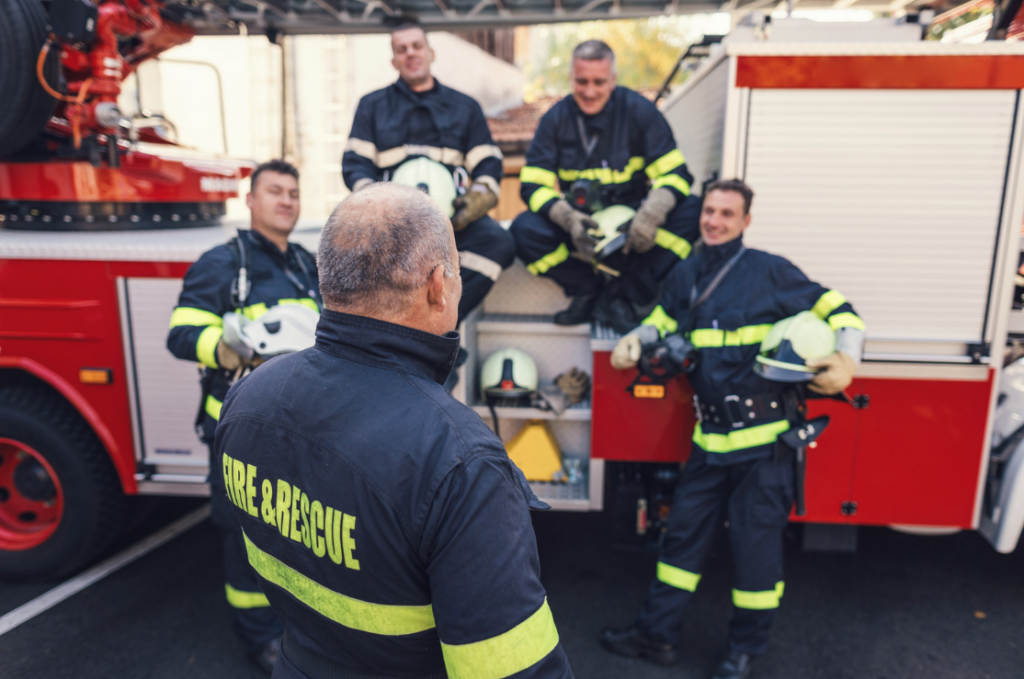
Fire chiefs and volunteer fire officers know how to work through stress. The demands of the job, the challenges of work-life balance, and the rigor required to stay ready for anything keep fire personnel resilient. To do their best, safest work, morale must stay up. Here’s what we recommend for fire department administrators and chiefs looking to maintain morale across their department.
How High-Stress Teams Maintain Morale
“Fire service leaders who understand the link between the well-being of their members and the performance and success of the department take comprehensive steps to create a positive environment that supports and promotes good health and optimal functioning. In short, they create a psychologically healthy fire department (PHFD)” — National Volunteer Fire Council
Emergency response is high-risk and high-stress, and teams can’t opt-out of this life-saving work. Reducing the stressors that teams can mitigate and control is key to improving morale. When working to foster a thriving volunteer fire department, focus on these goals:
- Reduce Mental Load: “Mental load” (or “cognitive workload”) is the mental effort required to understand and complete a task. The more complex or unfamiliar a process, the greater the mental load required to complete it. When someone is already drained from essential, high-stress work, all additional tasks demand greater mental load (regardless of individual competence or task complexity).
- Why This Matters: If at or near an overwhelming mental load, performance issues increase on any additional tasks and projects. This could lead to compliance/safety issues, interpersonal strain, and more.
- What to Do: Assess how tasks are tracked, managed, completed, and evaluated. What’s adding unnecessary mental load? How can you offload some of the effort required for those tasks without neglecting them?
- Improve Team Relationships: Fire teams’ work is highly communal, which often drives their success. But when they’re frazzled or dragged down by work, team relationships can suffer. It gets tougher to receive crucial feedback, recognize others’ contributions, and admit when support is needed.
- Why This Matters: Improving team relationships makes feedback more constructive and improves overall performance. Strong camaraderie reduces turnover and workplace conflict, keeping operations running smoothly.
- What to Do: Don’t wait until the semi-annual or EOY performance review, check in with your team often. Make sure they feel supported by peers and leadership. Learn what they’re proud of, and what skills they’d like to develop. Don’t forget to voice your appreciation and celebrate milestones with individuals, and as a team.
- Enhance Communication: When people know what’s expected of them and how to exceed expectations, their goals (and the path to reach them) are clearer. Hasty, inadequate communication prevents the most capable fire personnel from doing their job well.
- Why This Matters: Fire chiefs and fire department administrators have a responsibility to communicate job expectations (and how to progress toward them) clearly. This includes providing the coaching, professional development, and employee assistance necessary for each member of their team to reach their professional goals.
- What to Do: Document responsibilities, tasks, and all progress steps for each role on your team. Give your team autonomy: ensure they can readily document and monitor their own progress and respond to any real-time feedback they get from leadership.
- Simplify the Day-to-Day: Thorough fire department oversight is essential to maintain integrity and accountability with your team and the community you serve. Choosing tools and systems designed to support emergency personnel keeps your team informed and connected.
- Why This Matters: When everyone can update their task logs and progress quickly and clearly (even in the field), teams and leadership work together more effectively than ever.
- What to Do: Choose a performance management system built to track every task and demand your team takes on. With more administrative and reporting stress offloaded to a responsive system, your team can focus on supporting each other— and their community.
Ask a Fire Chief: Streamline Admin, Boost Morale
We’ve seen firsthand how offloading and automating crucial performance management tasks strengthens teams working in high-stress environments. Here’s what fire chiefs have noticed using TrackIT:
- How does a customized performance management system improve team morale for your crews?
“TrackIT has truly elevated how we manage and lead our people. It streamlines performance tracking, but more importantly, it fosters clear, direct communication across all levels of our organization. From frontline crews to command staff, expectations are transparent, feedback is timely, and accountability is shared. We appreciate how TrackIT encourages honest conversations and keeps everyone aligned on our mission and values.” — Chief Chad Russell, Andover KS
- How has greater autonomy improved performance?
“TrackIT performance management has significantly improved our goal-setting and performance tracking processes. Supervisors and officers now have real-time visibility into expectations and individual progress, resulting in a noticeable increase in accountability and clear expectations. The platform’s automated reporting tools have also streamlined our sem-annual and annual reviews, generating comprehensive performance reports with a single click. This efficiency not only saves administrative time, but also enhances our employees’ ability to track their performance.” CDM Fire Chief/Administrator Robbie Whitfield, Pace Fire Rescue District
- How has streamlining admin tasks reduced mental load?
“TrackIT provides our department with a more modern way of conducting ongoing performance evaluations. Not only has it eliminated the paper shuffle, it has streamlined the process to allow our officers to evaluate daily, weekly, and monthly with ease… After a year of the process, we’ve found that we are truly able to evaluate our staff’s performance.” Assistant Fire Chief Rob Bocanegra, Hutto District
Scalable Solutions Start Here
Your fire department has enough on their plate. Let TrackIT handle the documentation and facilitate communication. Task logs, performance milestones, and other critical reporting can be customized to your department and managed from a simple, secure dashboard. We offer scalable, personalized solutions to keep any team more connected, and any district safer. Less paperwork, less stress. Ready to see what’s possible? Request your TrackIT demo today.